Writing poems is not a business. We don’t clock in and clock out. Just because we sit with a keyboard in front of us or a notebook and pen if we’re old school doesn’t mean that a poem is going to result. Because we’re humans, we’re always looking for a way around this problem. Some poets use prompts, some make coffee, and some, like me, may diligently read their favorite writers in the hope that a fragment of an idea will penetrate our lethargic skulls.
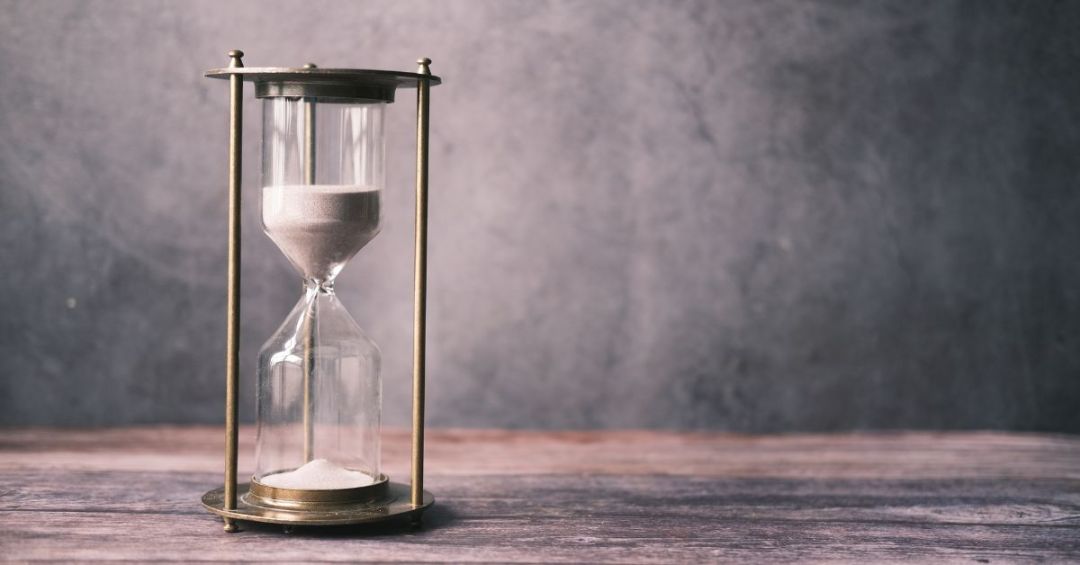
This is a frustrating situation. We’re a mercantile, technological society. Which is to say, we aren’t very good at waiting. Whether it’s waiting for our food at a restaurant, waiting in a never-ending line at Motor Vehicles, or waiting for our flight to be called at an airport, we’re just not good at it. I like to think our ancestors were better at this, had more patience, but I wasn’t around back then to make the comparison. Maybe they were just as bad as we are.
What’s even worse is how subjective the process is. I’m sure there are writers, especially novelists, who sit down each morning to work productively every day. Emile Zola claimed he worked like a shopkeeper. And, we know that Dylan Thomas, also worked each morning until he had a couple of lines that he liked, before heading off to the pub. I will not pretend that I’m without envy of those luminaries of regular production, but it’s not me and may not be a lot of others.
A poem, whether good or bad, usually starts for me with a phrase, a line, or an image—sometimes just a memory—that I catch as it spins through my head. The trick, of course, is to pay attention, to listen hard enough to that progression of thoughts going on at any given moment. This isn’t as easy as it sounds. It involves stepping away from who I am, creating a self that listens to the self or selves generating those thoughts. It makes me a little dizzy to think about it. The effect is something like two mirrors facing each other. You get that infinity of receding images called a mise en abyme, something placed in the abyss. Somehow, the self speaking in the poem, the voice of the poem, avoids—with a little luck—getting lost in the way one self dissolves into another or ideas succeed each other. A kind of thread of sounds, images, thoughts, and memory unravels like Ariadne’s ball of yarn. It’s not an accident that this is how Theseus gets out of the labyrinth, just like it’s not an accident that Hansel and Gretel follow a trail of breadcrumbs, when the birds don’t get to them first, to get out of the forest. Paying attention to what’s going on inside is confusing, and it’s not always possible to find the yarn or the breadcrumbs. This is when taking the dog for a walk starts to look like a really good idea.
This is not a contemporary defense of inspiration. Poets are not passive recipients of words spoken in a trance. The voice of the poem is an intentional process as well as an associational process. However, the poet’s intention is not enough by itself, and it shouldn’t be. On days when we can’t hear those other selves, it doesn’t work to engage in an exercise so that we can tell ourselves that we are working at a serious job. Admittedly, waiting entails a lot of anxiety. Maybe that last poem will actually prove to be the last poem—ever. There is no algorithm or formula that will produce poems. A group of words can be produced by an exercise, and they may fall into lines on the page, may even be in meter, or be rhymed, but they’re not poems. They lack the emotional fuel to become poems.
Poetry is not a steady job, and when we’re unemployed, it’s not a good feeling. The waiting we have to do goes against all our cultural upbringing, and we often look to craft to reassure us. If we only take the right “generative workshop,” read the right craft essay, or listen to the right podcast, we won’t have to wait anymore. Perhaps, though, this waiting is important. Perhaps, it’s what allows us to write poems that matter, that address the conflicts between all the selves we contain.
I notice that most journals these days ask for some assurance from the writers who submit work that the submission has not been created using “artificial intelligence.” When it comes to poetry, this expression is an oxymoron: the phrase contradicts itself because the kind of intelligence that produces a poem is not an agglomeration of images and phrases skimmed from millions of pages of text. Poetry arises from paying attention to what conflicts us, what we’ve lost, what we desire, from paying attention to that mise en abyme of selves. Craft can be duplicated by artificial intelligence, poetry can’t. If editors worry they will be deceived by a poem created by agglomeration, the problem may lie in the type of poems they want to publish rather than the type submitted.
More than ever, it’s important to consider alternatives to the mercantile, good-work-ethic approach to writing and understanding poetry, and to accept that the process of writing our poems, which includes the time when we’re not writing, determines the nature of the poems that we write. Poets should, of course, write however they are impelled to write and whenever they’re impelled to write. If it works to sit in the same spot at the same time every day, that’s great. But, the poetry that’s produced is what counts. Many of the poets whose poems mean the most to us learned that waiting was important. The famous story of Rilke going to the zoo in Paris to look at the animals until he could really see them is an example of how a poet can wait and what kind of poems can come out of that waiting. No artificial intelligence could have written “The Panther” or “Archaic Torso of Apollo.” We need to learn to wait.