
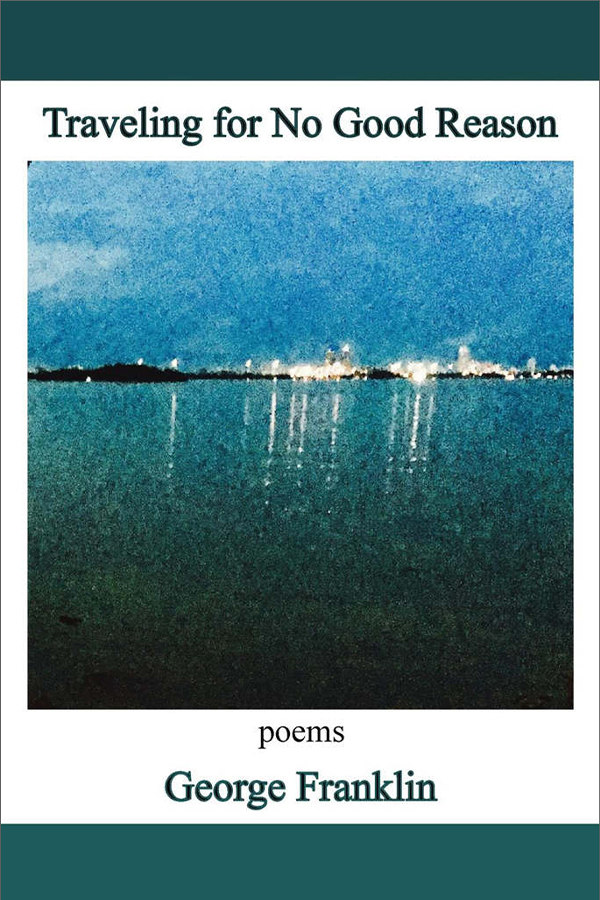
Traveling for No Good Reason
The poems in Traveling for No Good Reason tell stories, and they invite the reader to enter into those stories. Whether the poet is drinking Cuban coffee in Miami, visiting Joseph Brodsky’s grave in Venice, teaching writing workshops in a Florida prison, learning to read Greek in New York City in the 1980s, or trying to make sense out of a love that is unexpected and undeserved, the stories are about the recompense we receive for our losses, the pleasures and ideas that allow us to start to live all over again. Sometimes that recompense is erotic, sometimes merely the fact of telling the story. The poems are conversational in style while at the same time seeking out what is often hard to talk about: the end of a marriage, a friend’s slow death, or what desire might actually mean. Regardless, it’s the conversation that’s always foremost. In looking to understand, these poems themselves want to be understood, to be transparent. They may engage historical or mythological figures or the woman whose life the poet shares, but their conversation is ultimately with the reader.
Traveling for No Good Reason won the 2018 Sheila-Na-Gig Manuscript Contest and is published by Sheila-Na-Gig Editions.
REVIEWS
George Franklin’s Traveling for No Good Reason, Reviewed by Richard Allen Taylor
Most of the traveling in George Franklin’s new poetry collection is done not by train or plane but by memory. This has several advantages. Traveling by memory is inexpensive, instantaneous, and allows the traveler to go backwards and forwards in time.
Broadsides to Books: Is the Arrow in Motion?
In his second book, Traveling for No Good Reason, George Franklin shoots the reader straight into Zeno’s paradox of the arrow: in any instant, nothing moves. As he writes in “Scrapbooks:”